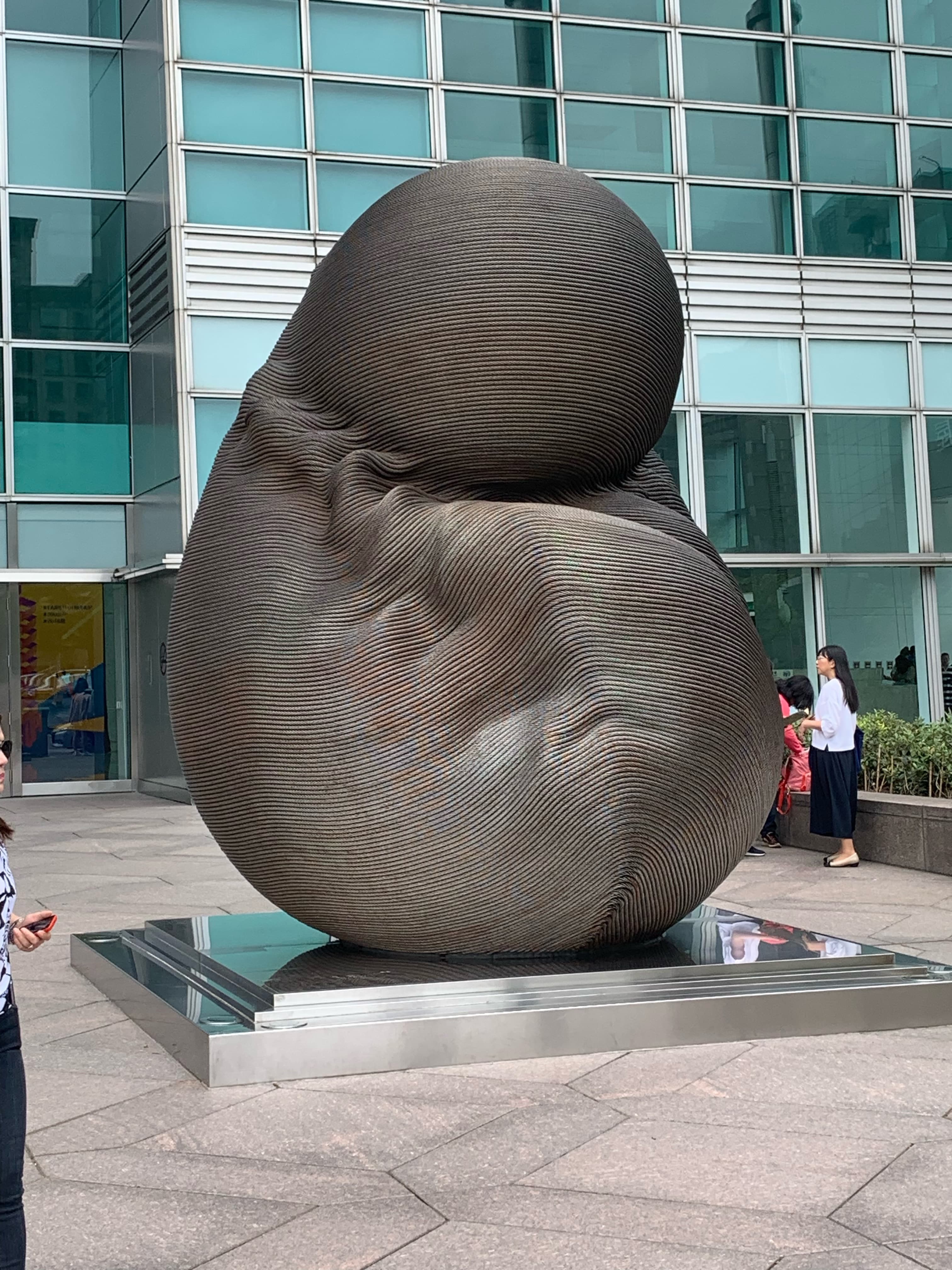

Kang Mu-Xiang
Kang Mu-Xiang (b. 1961, Miaoli County, Taiwan) is a Taiwanese sculptor renowned for transforming discarded materials into profound meditations on rebirth and the cycles of life. Born into an aristocratic family of third-generation woodcarvers, Kang began learning traditional woodcarving at age 13 and has evolved over three decades from craftsman to artisan to internationally recognized artist.
A pivotal moment in Kang's career came in 2002, when typhoons uprooted trees across Taiwan. He spent a year on the outlying Guishan Island giving new life to driftwood washed across the sea, creating sculptures that embodied oriental concepts of renewal and transformation. This philosophy of "rebirth" has become central to his practice.
In 2013, Kang expanded his material palette when Taipei 101 invited him to create environmentally conscious art from retired elevator cables. He now works with steel cables sourced globally—from Taiwan, Japan, Mainland China, and Brazil—coiling them into organic, embryonic forms that challenge viewers to reconsider waste and renewal. His work has been exhibited internationally, including a 2015 gift to Karlsruhe, Germany, celebrating the city's 300th anniversary, and exhibitions at Grounds For Sculpture in New Jersey.
Often called "the primitive man of modern Taiwan," Kang is among the rare Taiwanese sculptors to achieve international recognition, continuously pushing boundaries and transcending his own artistic limitations.
A pivotal moment in Kang's career came in 2002, when typhoons uprooted trees across Taiwan. He spent a year on the outlying Guishan Island giving new life to driftwood washed across the sea, creating sculptures that embodied oriental concepts of renewal and transformation. This philosophy of "rebirth" has become central to his practice.
In 2013, Kang expanded his material palette when Taipei 101 invited him to create environmentally conscious art from retired elevator cables. He now works with steel cables sourced globally—from Taiwan, Japan, Mainland China, and Brazil—coiling them into organic, embryonic forms that challenge viewers to reconsider waste and renewal. His work has been exhibited internationally, including a 2015 gift to Karlsruhe, Germany, celebrating the city's 300th anniversary, and exhibitions at Grounds For Sculpture in New Jersey.
Often called "the primitive man of modern Taiwan," Kang is among the rare Taiwanese sculptors to achieve international recognition, continuously pushing boundaries and transcending his own artistic limitations.